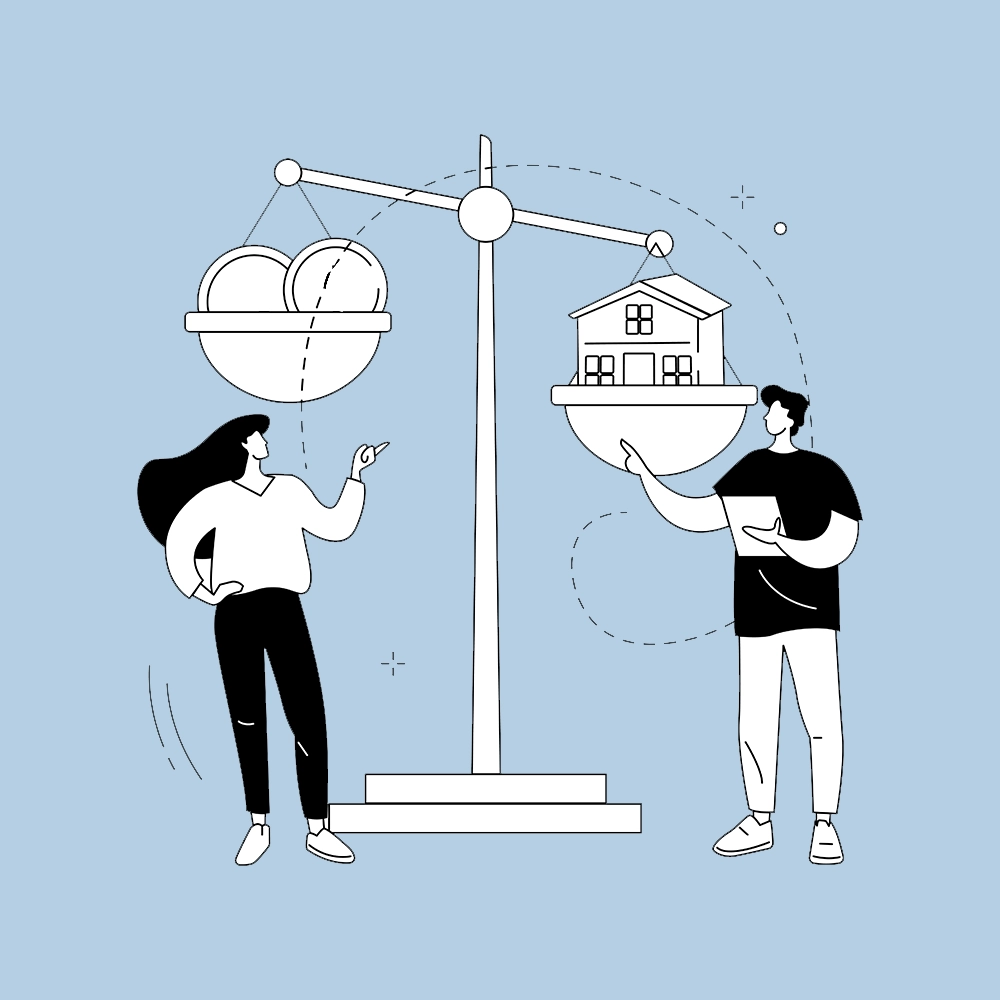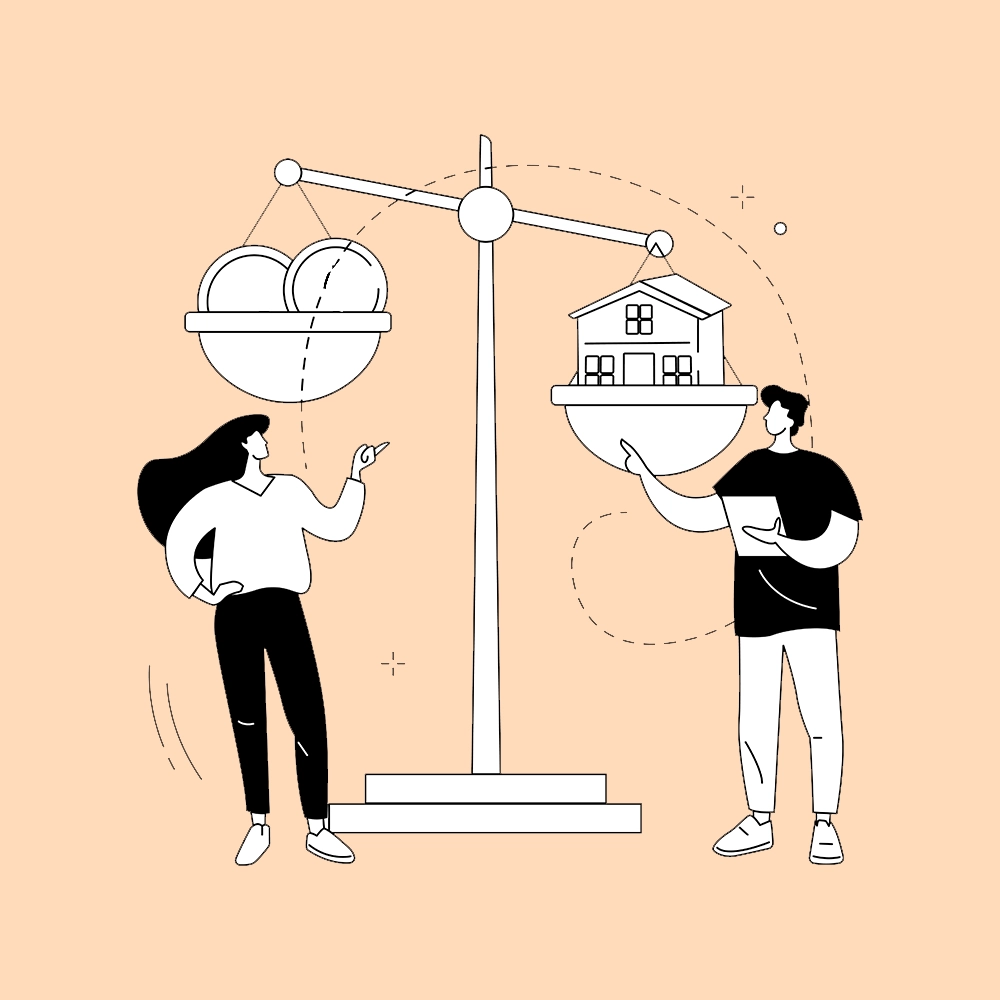
When you take out a home improvement loan, the term you choose (the length of time you have to repay it) determines two things simultaneously: how much you pay each month and how much you pay in total. A shorter term produces higher monthly payments and lower total interest. A longer term produces lower monthly payments and higher total interest. Most borrowers instinctively look for a comfortable monthly payment, but the total cost difference between a three-year and a ten-year loan on the same amount can be substantial. Understanding that trade-off with real numbers is the most useful thing this guide can provide.
This guide covers the mechanics of the term decision, a worked example showing the cost difference across common term lengths, the factors that should guide the choice for a specific renovation project, and the interaction between loan type (secured versus unsecured) and the terms available. The guide to what home improvement loans are covers the product types available if that context is needed first.
At a Glance
-
The right term produces the lowest total cost the monthly budget can genuinely support; not the lowest monthly payment.
A longer term reduces the monthly payment but increases the total interest paid. The optimum is the shortest term where the monthly payment is affordable at the lower end of income expectations, not at maximum earnings. The total cost calculation (monthly payment multiplied by the number of months, plus any fees) should be run for at least two or three term options before making a decision.
› The term trade-off explained · Worked example with numbers
-
For a £15,000 loan at 8% APR: 3 years costs approximately £1,920 in interest; 5 years costs approximately £3,250; 10 years costs approximately £6,900.
The monthly payments are approximately £470, £304, and £182 respectively. Most borrowers choose the 5-year option as a balance point, but the decision should be based on what is genuinely affordable at quiet-income months, not just average months. The gap between 5 and 10 years is approximately £3,650 in additional interest, which is worth knowing before extending the term to reduce monthly pressure.
-
Unsecured loans typically cap at around 7 years; secured loans can run to 15 years or more but put the property at risk.
The loan type affects both which term lengths are available and what the risk implications are. Unsecured personal loans are available for shorter terms and do not require collateral. Secured loans allow longer terms and lower rates on larger amounts, but the property is at risk if payments are missed. The choice between secured and unsecured is therefore not just a cost decision but a risk decision, and it affects the range of term options available.
Ready to see what you could borrow?
Checking won’t harm your credit scoreThe term trade-off: what is actually being decided
Every pound of interest on a home improvement loan is calculated on the outstanding balance. The longer the balance remains above zero, the more interest accrues. Extending the loan term does not change the interest rate; it changes how long interest has to accumulate on each pound of outstanding debt. A loan that takes ten years to repay rather than five years generates roughly twice the exposure time for interest to compound, which is why total interest costs rise significantly with longer terms even when the rate stays the same.
The monthly payment, by contrast, falls as the term extends because the same principal is being spread over more months. This reduction in monthly payment is real and meaningful for borrowers where cashflow is the binding constraint. The trade-off is concrete: each extra year of term reduces the monthly payment at the cost of increasing the total amount paid. The question is where the right balance sits for a specific household’s income, the specific project cost, and the anticipated duration of ownership of the property.
A useful starting point is to identify the maximum monthly payment that is genuinely affordable at the lower end of expected income, not at average or peak earnings. This figure becomes the upper limit for the monthly payment, and the term is then the shortest number of years that produces a payment at or below that limit. This approach produces the shortest feasible term and therefore the lowest total cost, rather than the longest affordable term, which maximises total interest paid while minimising the monthly obligation. The guide to budgeting before you borrow covers how to calculate affordable monthly payments in the context of a home improvement project.
Worked example: the same £15,000 across different term lengths
The following table shows the monthly payment and total interest cost for a £15,000 home improvement loan at an illustrative 8% APR across four common term lengths. All figures are approximate and illustrative only. Actual rates and costs will vary depending on the lender, credit profile, and loan type.
| Term | Monthly payment | Total repaid | Total interest | vs 5-year cost |
|---|---|---|---|---|
| 3 years | approx. £470 | approx. £16,920 | approx. £1,920 | Save £1,330 |
| 5 years | approx. £304 | approx. £18,250 | approx. £3,250 | Baseline |
| 7 years | approx. £234 | approx. £19,650 | approx. £4,650 | +£1,400 |
| 10 years | approx. £182 | approx. £21,900 | approx. £6,900 | +£3,650 |
All figures illustrative. Based on £15,000 at 8% APR. Actual costs will vary by lender and credit profile.
Show the working
3-year term (36 months)
5-year term (60 months)
7-year term (84 months)
10-year term (120 months)
Monthly payments calculated using the standard annuity formula at 8% APR (monthly rate 0.667%). All figures illustrative. Actual rates and costs will vary by lender and credit profile. Rounding the monthly payment to two decimal places may produce totals that differ by a few pence from a full amortisation schedule.
The table makes the trade-off visible in a way that abstract descriptions cannot. The monthly payment difference between 3 years and 10 years is approximately £288 per month. The total interest difference is approximately £4,980. A borrower who extends from 5 years to 10 years to reduce the monthly obligation by approximately £122 pays an additional £3,650 in total interest to achieve that saving. Whether that is worthwhile depends entirely on whether the £122 monthly difference matters to the specific household budget. In some cases it does. The point is to make that decision knowing the actual cost rather than just the monthly payment reduction.
For borrowers who choose a longer term for cashflow reasons, it is worth confirming whether the loan allows penalty-free overpayments. A 10-year loan that permits overpayments can be treated as a safety-net term: the minimum payment is the 10-year figure, but any month where income allows it, additional payments reduce the principal and shorten the effective term. This produces some of the flexibility of a longer term while preserving the option to reduce total interest if circumstances improve. The home improvement loan calculator allows different term and rate scenarios to be modelled for specific loan amounts.
What should drive the term choice
Three factors most reliably drive the right term choice for a specific renovation project. The first is the monthly affordability threshold. As noted above, the right question is not “what monthly payment can I manage comfortably?” but “what monthly payment can I manage at the lower end of expected income?” Choosing a term based on comfortable average income produces a payment that may become difficult in a quieter month. Building in margin produces a payment that holds under most realistic scenarios.
The second factor is the project scope and the relationship between the improvement and the property. A kitchen renovation that adds value and that the homeowner intends to keep for many years can reasonably justify a medium-term loan where the total interest cost is contained and the improvement continues to deliver value long after the loan is repaid. A cosmetic update that may not survive a sale, or a project on a property that may be sold within two or three years, is harder to justify on a ten-year term where the loan might outlast the benefit. The guide to whether a home improvement loan is right for you covers this value assessment in more detail.
The third factor is anticipated income or financial changes during the term. A borrower who expects a salary increase, is close to the end of an existing financial commitment, or anticipates a financial event (the completion of another loan, a planned sale, an inheritance) within the loan period may benefit from a shorter term that will be over before those changes take effect, or from a medium term with overpayment flexibility that allows the loan to be shortened once circumstances improve. The guide to how to avoid overborrowing covers the broader discipline of borrowing only what is needed, which is relevant alongside the term decision.
Secured vs unsecured: how loan type affects available term lengths
The type of loan chosen for a home improvement project directly affects which term lengths are practically available. Unsecured personal loans from mainstream UK lenders typically have terms of one to seven years, with the maximum amount available also capping out (commonly at around £25,000 to £30,000, though this varies by lender). For smaller projects within these parameters, an unsecured loan offers the straightforward advantage of no collateral risk: the property is not at risk if payments are missed, though the credit file will be affected and debt recovery action may follow.
Secured loans, which are typically second charge mortgages or homeowner loans secured against the property, allow longer terms (commonly up to fifteen or twenty years) and generally permit higher borrowing amounts at lower rates than unsecured products for equivalent borrowers. The trade-off is that the property secures the loan. Missed payments create a direct risk to the home, and the longer terms that make secured loans attractive from a monthly payment perspective also mean a longer period of exposure to that risk. The guide to secured versus unsecured home improvement loans covers this choice in detail. The guide to secured loans covers the broader implications of property-secured borrowing.
For large-scale renovations where a secured loan is the appropriate product, the same term logic applies: the right term is the shortest one where the monthly payment is affordable at the lower end of expected income. The extended terms available on secured products can be genuinely useful for managing monthly cashflow on large borrowing amounts, but the total interest cost over fifteen or twenty years on a large loan is significant and should be calculated and acknowledged before committing to the term. The guide to using equity for home improvements is relevant context where secured borrowing is being considered against available equity.
Pitfalls to avoid when choosing a term
Choosing a term based on the minimum monthly payment without calculating total cost is the most common pitfall. It produces the longest feasible term rather than the optimal one, and the total interest differential between a mid-range and a maximum-length term is often several thousand pounds. Making the decision with the total cost table rather than just the monthly payment figure takes approximately five minutes and typically changes the conclusion.
Ignoring overpayment terms is a related issue. A loan that appears affordable at a medium term becomes inflexible if early repayment carries a penalty. Confirming overpayment flexibility before signing means a longer term can be used as a safety net rather than a ceiling. If the loan does not permit overpayments, a shorter term that requires higher monthly payments but locks in the lower total cost may be preferable.
Choosing a term without accounting for other financial commitments is also worth avoiding. A home improvement loan taken alongside an existing mortgage, a car finance agreement, or other regular monthly obligations needs to fit within the total monthly debt service budget, not just be individually affordable in isolation. The guide to top mistakes to avoid covers a broader set of application and term decision errors that are common in this category.
Ready to see what you could borrow?
Checking won’t harm your credit scoreFrequently asked questions
How long is a typical home improvement loan?
Unsecured personal loans for home improvements are most commonly taken over one to seven years, with five years being a common midpoint. The right term depends on the loan amount, the monthly payment the borrower can afford, and the total interest cost the borrower is willing to accept. Secured loans, which are typically second charge mortgages, can run to fifteen years or more and are more commonly used for larger amounts.
There is no universal correct term. Two borrowers taking the same loan amount at the same rate should still choose different terms if their monthly budget constraints differ. The worked example in this article illustrates how the monthly payment and total cost change across different term lengths for a specific loan amount, and the home improvement loan calculator allows this to be modelled for any specific scenario.
Is it better to choose a shorter or longer loan term?
From a total cost perspective, shorter is always better if the monthly payment is affordable. A shorter term produces less total interest because the loan balance falls more quickly and there is less time for interest to accumulate. The practical question is what “affordable” means for the specific household, which requires an honest assessment of the monthly budget at the lower end of expected income rather than at average or peak earnings.
Where a shorter term would produce a monthly payment that would cause genuine difficulty in a below-average income month, a longer term is appropriate to provide safety margin. The question then is whether overpayment flexibility can be included in the loan terms, so that stronger months allow the effective term to be shortened without penalty.
Does the loan term affect the interest rate offered?
It can, though the relationship is not always straightforward. Some lenders offer the same rate across all term lengths for a given borrower. Others price longer terms at higher rates to reflect the extended credit risk. In some cases, lenders offer promotional rates for specific term lengths. The total cost comparison should include the rate offered for each specific term being considered rather than assuming the same rate applies across all options.
For unsecured loans, the rate will also reflect the borrower’s credit profile and the loan amount, independently of the term. A larger loan on a longer term at a higher rate produces a significantly higher total cost than a smaller loan on a shorter term at a lower rate, even if the monthly payments feel similar. Checking the rate for each specific term combination being considered is the only way to compare accurately.
Can I repay a home improvement loan early?
This depends on the specific loan terms. Many unsecured personal loans allow partial or full early repayment, sometimes with a charge equivalent to one or two months’ interest. Others allow penalty-free overpayments up to a specified amount per year. Some secured loans have early repayment charges that can be significant, particularly in the early years of the term. Confirming the overpayment and early repayment terms before accepting any loan is worth the time, particularly if there is any prospect of the financial position improving during the term.
Early repayment reduces the total interest paid because each overpayment reduces the outstanding balance on which future interest is calculated. On a ten-year loan, a consistent modest overpayment each month can reduce the effective term by several years and produce a meaningful saving on total interest. The specific calculation depends on the rate and the overpayment amount, but the principle holds across all term lengths and loan types.
How does the loan term interact with the secured versus unsecured decision?
The loan type sets the range of term lengths that are practically available. Unsecured personal loans from mainstream lenders typically have a maximum term of around seven years and a maximum loan amount that limits which projects they can cover. Secured loans allow longer terms and higher amounts at generally lower rates, but they secure the loan against the property, creating repossession risk if payments are missed.
For projects that can be funded within unsecured loan parameters, the shorter maximum term is often an advantage from a total cost perspective. For larger projects where a secured loan is the appropriate product, the longer terms available need to be assessed against the total interest cost over the full term rather than just the monthly payment benefit. The guide to secured versus unsecured home improvement loans covers this choice and its implications in full.
Squaring Up
The loan term decision for a home improvement project is fundamentally about the relationship between monthly payment and total interest cost. Shorter terms produce lower total cost and higher monthly payments; longer terms do the reverse. The worked example in this article shows that the same £15,000 loan at 8% APR costs approximately £1,920 in total interest over 3 years versus approximately £6,900 over 10 years. The right term is the shortest one where the monthly payment is affordable at the lower end of expected income, not the longest one where the monthly payment is minimised. Confirming overpayment flexibility before accepting any loan allows a longer safety-net term to be used without locking in maximum total interest if circumstances improve. The secured versus unsecured choice affects which term lengths are available and what the risk implications are; it is worth considering both dimensions together rather than separately.
Ready to see what you could borrow?
Checking won’t harm your credit score Check eligibilityThis article is for informational purposes only and does not constitute financial or legal advice. All figures used in examples are illustrative and do not represent a guarantee of rates or terms. Your home may be at risk if you do not keep up repayments on a secured loan. Actual costs will depend on individual circumstances and the specific loan terms offered.